Short answer: a boiler chimney needs repair when you see soot or rust around the breeching, the boiler locks out on draft faults, exhaust smells show up in the boiler room or hallways, water stains appear on top-floor ceilings near the stack, or masonry falls from the roof. Any one of these is a reason to schedule a commercial chimney inspection before the building runs its boilers around the clock.
In New York City, heat season runs from October 1 to May 31, and owners of residential buildings must keep apartments at the temperatures set by the city’s Housing Maintenance Code. That makes the chimney a critical part of the heating plant. If the flue fails in January, the boiler goes down with it. Below are the five signs our crews see most often on multifamily, commercial and mixed-use buildings across the five boroughs and Long Island, and what each one usually means.
1. Soot, Rust or Staining at the Breeching
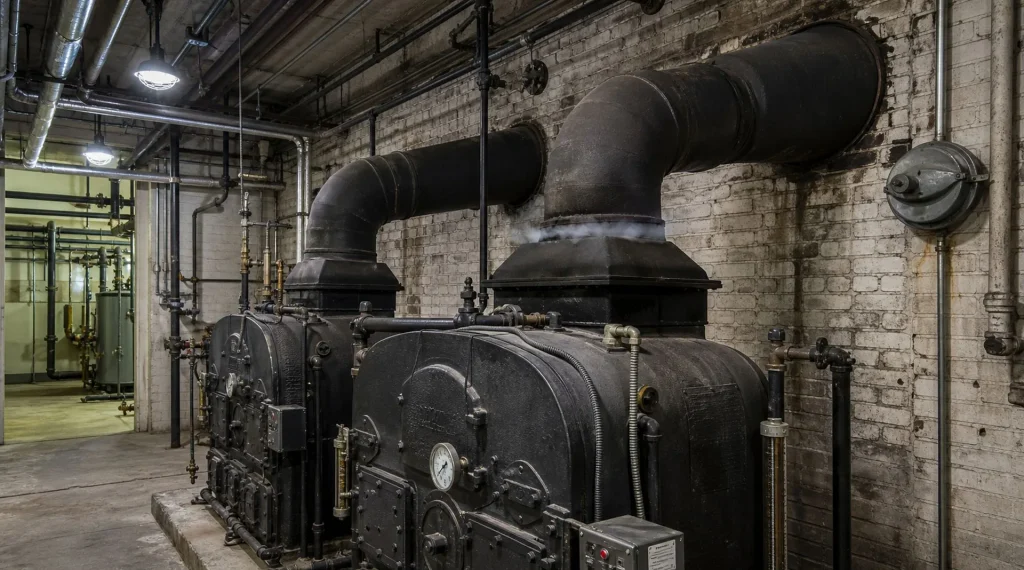
The breeching is the horizontal connector between the boiler and the chimney. It runs hot, it carries the full load of combustion gases, and it is often the first part of the system to fail.
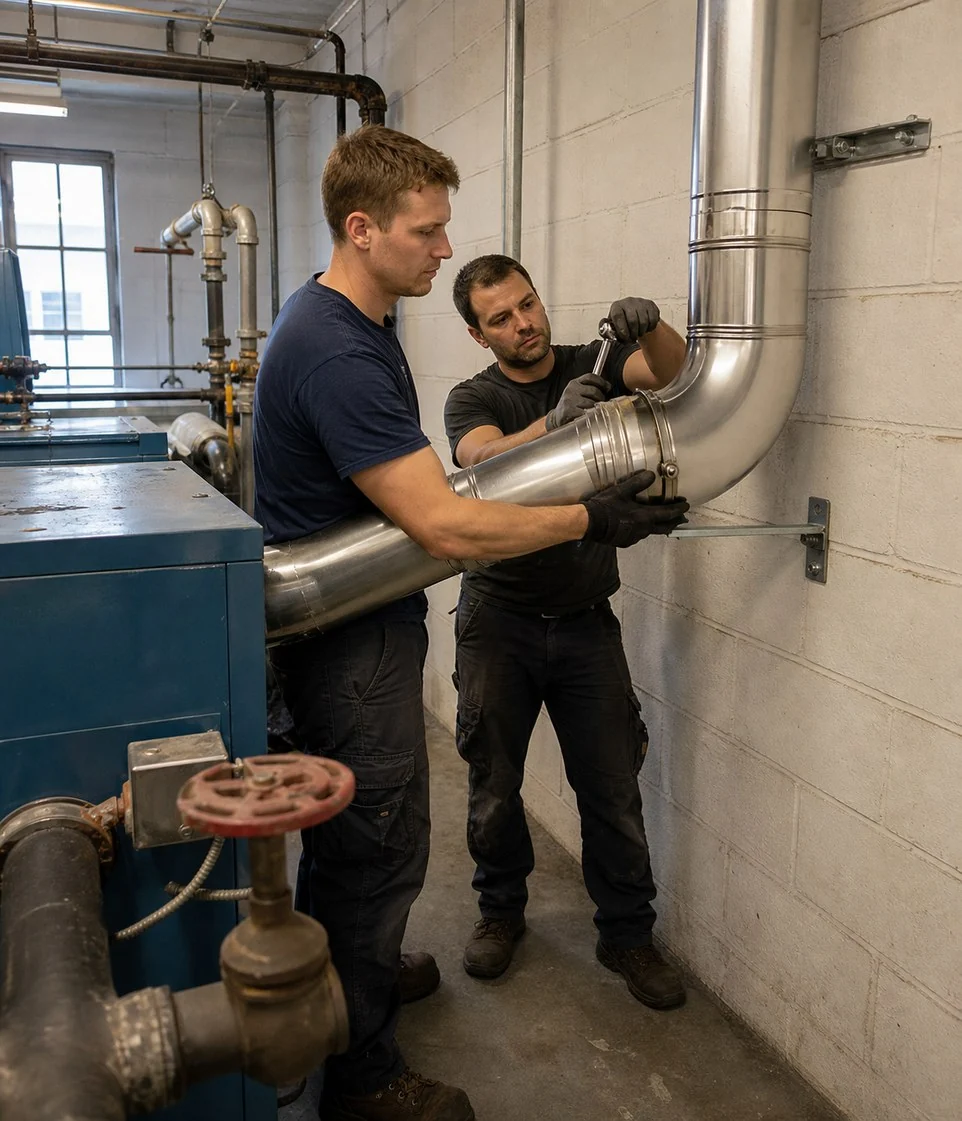
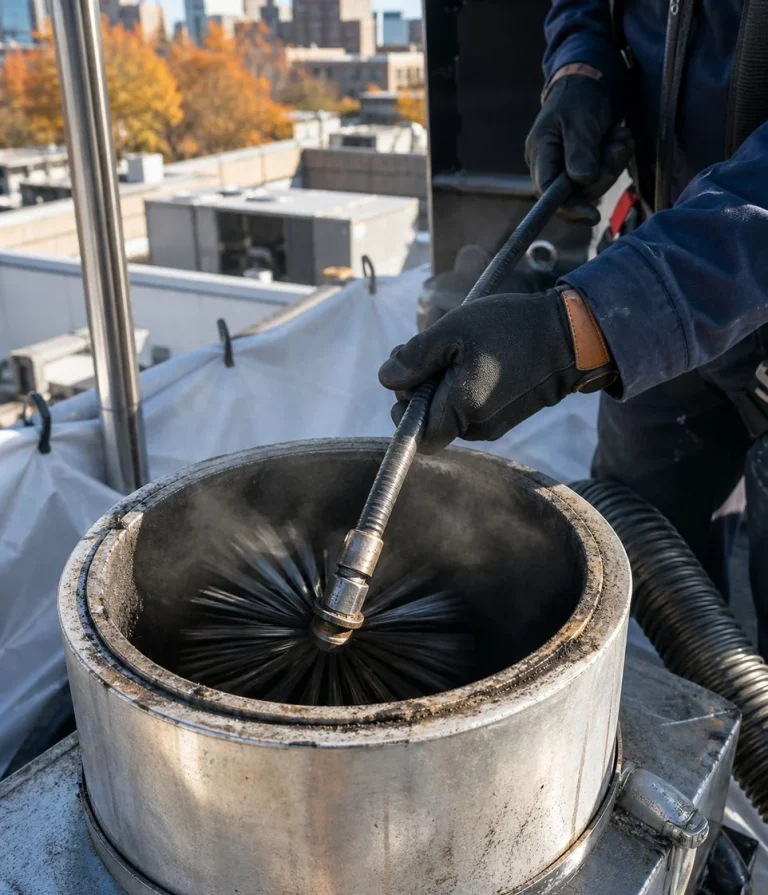
- Black soot streaks around joints mean gases are escaping into the boiler room.
- Rust flakes or pinholes in steel breeching point to corrosion from condensation, common after a fuel switch or a boiler replacement.
- Loose or sagging sections mean supports have failed and joints are opening.
A leaking breeching is not a cosmetic problem. It can put carbon monoxide into the boiler room and, from there, into stairwells and apartments.
2. The Boiler Keeps Locking Out on Draft or Flame Faults
Modern burners and boiler controls shut down when draft is wrong. If the super is resetting the boiler again and again, the chimney is a prime suspect. Common causes include:
- A partial blockage from fallen liner tiles, debris or bird nests
- A liner that is oversized or undersized for the current boiler
- A failed draft fan, draft inducer or barometric damper
- A chimney that is too short for the building next door, so wind pushes exhaust back down
Draft and pressure testing under real operating conditions tells us which one it is. Guessing usually means replacing the wrong part.
3. Exhaust Smells in the Boiler Room or Hallways
Tenants often describe it as a “burning oil” or “gas” smell in the cellar, the lobby or upper hallways. On older masonry stacks the cause is often a cracked clay liner or open mortar joints that let exhaust leak into wall cavities. On steel systems it is usually a failed joint or a corroded section.
Because the building’s carbon monoxide alarms may not be close to the leak, treat any persistent exhaust odor as urgent. Our crews respond 24/7 for venting problems that affect occupants.
4. Water Stains Near the Stack on Top Floors
Top-floor apartments and bulkheads next to the chimney tell you what is happening at the roof. Stains, peeling paint or efflorescence (white salt deposits) near the stack usually trace back to:
- A cracked or missing chimney crown
- Failed flashing where the stack meets the roof
- A missing cap, which lets rain run straight down the flue
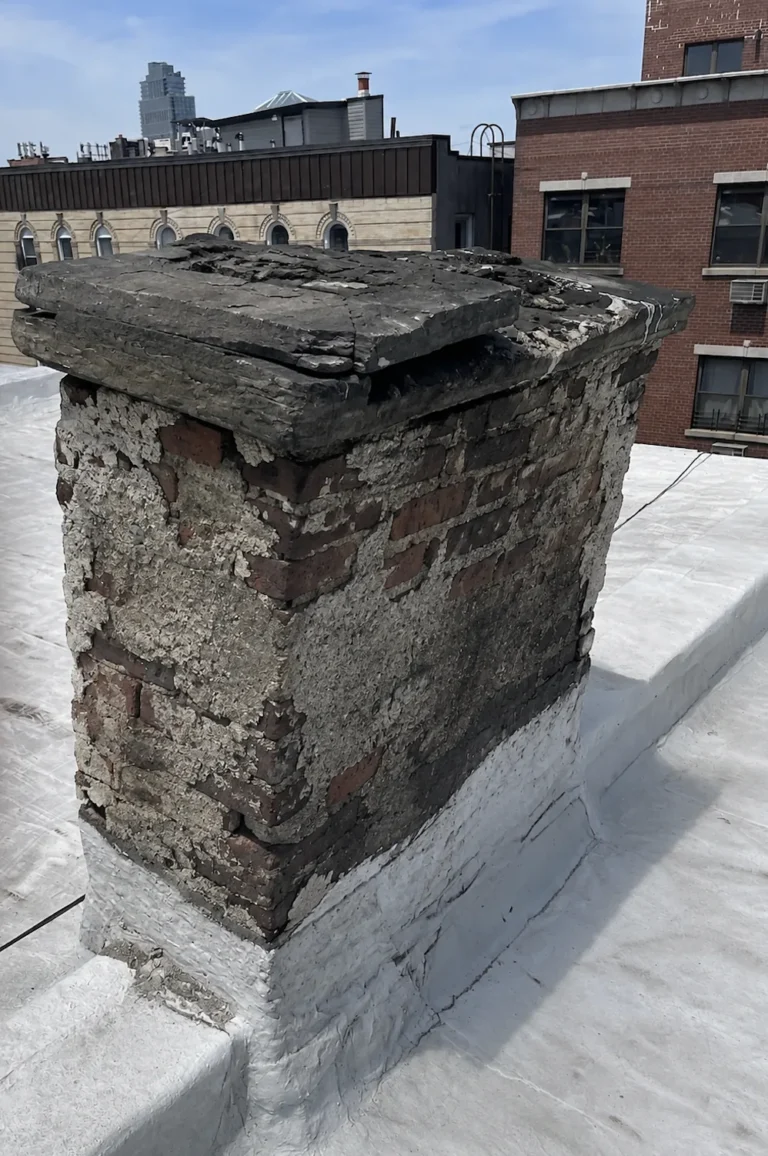
- Spalling brick that soaks up water and passes it inside
Water inside a boiler chimney does double damage. It rots the masonry from the inside and it mixes with combustion byproducts to form acids that eat liners and breeching.
5. Falling Masonry or a Leaning Stack on the Roof
Loose brick on the roof, mortar in the gutters or a stack that no longer looks straight is a structural and public safety issue, especially on tall buildings over sidewalks. These conditions can also come up in facade and roof inspections, and they rarely get cheaper with time. Stabilizing or rebuilding the damaged section, repointing and a new crown are typical repairs, often with scaffold or a lift for access.
What a Commercial Chimney Repair Visit Looks Like
When a building calls us, the goal is to find the cause, not to guess. A typical commercial chimney repair visit includes:
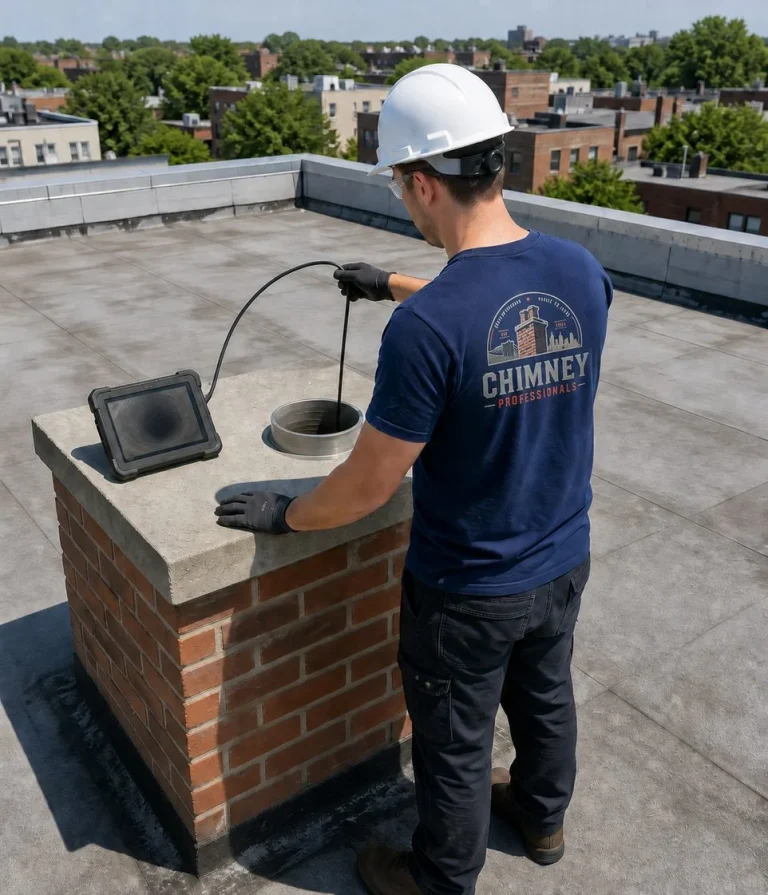
- Assessment and diagnosis with camera scans of the flue, smoke and draft testing, and photos of every problem area.
- A written scope and proposal, including permitting support when the repair needs it.
- Scheduling around the building, with repairs planned around continuous boiler operation and occupied spaces.
- Repair of the masonry, liner, breeching, draft fan or flashing.
- Testing and documentation: draft is retested, and you receive photo records and test results for your files.
Because we manufacture our own UL Listed stainless steel liners, flue pipe and fittings in house, odd sizes do not hold up the job while we wait on a distributor.
Repair Now or Wait Until Spring?
Some work is best scheduled for the off season, such as a full stack rebuild. But anything that affects venting (a leaking breeching, a blocked flue, a failed fan) should not wait. A short, planned shutdown in October is far easier on tenants than an emergency in February. If you are not sure which category your building falls into, start with a commercial chimney inspection. The written report separates urgent items from items that can be budgeted for next year.
Buildings still burning No. 4 heating oil should also plan ahead. The city bans No. 4 oil in all boilers after July 1, 2027, and a fuel change often means the chimney has to be relined or resized. We cover that in our guide to the NYC No. 4 heating oil ban.
Frequently Asked Questions
Can you repair a boiler chimney without shutting off heat?
In most cases, yes. We plan the work around continuous boiler operation and schedule any required downtime with building management so it is as short as possible.
How fast can you respond to a boiler chimney failure?
We offer 24/7 emergency service for venting failures that affect occupants. Planned repairs are scheduled after a site visit and a written scope.
Do you work with property managers and mechanical contractors?
Yes. We work directly for owners and managers and as a subcontractor for general and mechanical contractors across NYC and Long Island.
What records do we get after the repair?
Photo documentation and draft test results that you can keep with the building’s maintenance and insurance records.
Heat season is here. Request a free estimate for commercial chimney repair in NYC and Long Island.