Short answer: most chimney leaks come from six sources: failed flashing where the chimney meets the roof, a cracked crown, a missing or damaged cap, porous or spalling brick, deteriorated mortar joints, and condensation inside the flue. The fix depends on the source, so the first step is finding where the water actually gets in, not just sealing the spot where it shows up.
Fall nor’easters and heavy spring rains are when New York homeowners notice it: a brown stain on the ceiling next to the chimney breast, peeling paint around the fireplace, water in the firebox or a damp, musty smell. Here is how to read the signs.
| What you see | Most likely source | Usual fix |
|---|---|---|
| Ceiling or wall stain where the chimney passes through the roof | Flashing | New step and counter flashing |
| Water in the firebox, rusted damper | Crown or missing cap | Crown repair or rebuild, new cap |
| Flaking brick faces, white salt deposits | Porous or spalling brick | Brick replacement and breathable water repellent |
| Sandy, recessed or open joints | Mortar | Repointing |
| Stains in cold, dry weather near a furnace or boiler | Condensation in the flue | Stainless steel liner sized to the appliance |
1. Damaged or Failing Flashing
Flashing is the metal seal between the chimney and the roof. It is the most common source of chimney leaks. Over time, sealant dries out, metal corrodes, and roofers sometimes cut corners by smearing tar over old flashing instead of replacing it.
Signs: stains on the ceiling or wall right where the chimney passes through, leaks that show up only in wind-driven rain, visible gaps or rust at the roof line.
The fix: proper chimney flashing repair means step flashing woven into the roofing and counter flashing cut into the mortar joints of the chimney, not surface caulk. On flat NYC roofs, the base flashing has to be tied correctly into the roof membrane.
2. A Cracked Chimney Crown
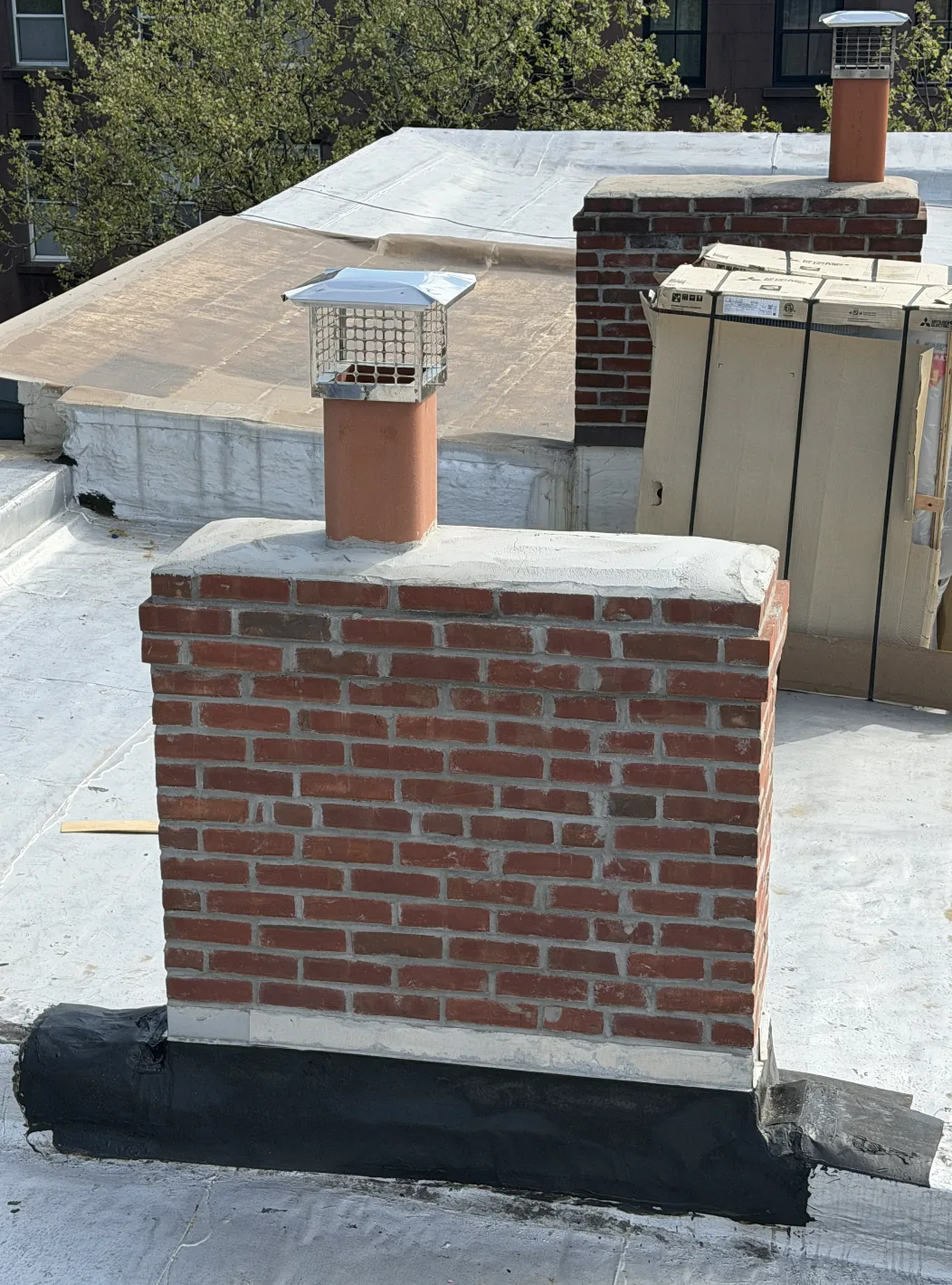
The crown is the concrete slab at the top of the chimney that sheds water away from the flue. Many older crowns were built from a thin layer of mortar, which cracks after a few freeze-thaw winters.
Signs: water in the firebox, rust on the damper, crumbling masonry near the top of the stack.
The fix: small cracks can be sealed with a flexible crown sealer. A badly cracked or mortar-wash crown should be rebuilt with a proper overhang and drip edge so water falls clear of the brick. See our new crown and cap project.
3. A Missing or Damaged Chimney Cap
Without a cap, rain falls straight down the flue. It soaks the smoke chamber, rusts the damper and, in gas or oil flues, mixes with combustion byproducts to form acids that damage the liner.
Signs: water in the firebox during rain, rust stains, animal or bird activity in the chimney.
The fix: a stainless steel cap sized to the flue, or a custom multi-flue cap for row-house stacks with several flues. See our chimney cap repair and installation service.
4. Porous or Spalling Brick
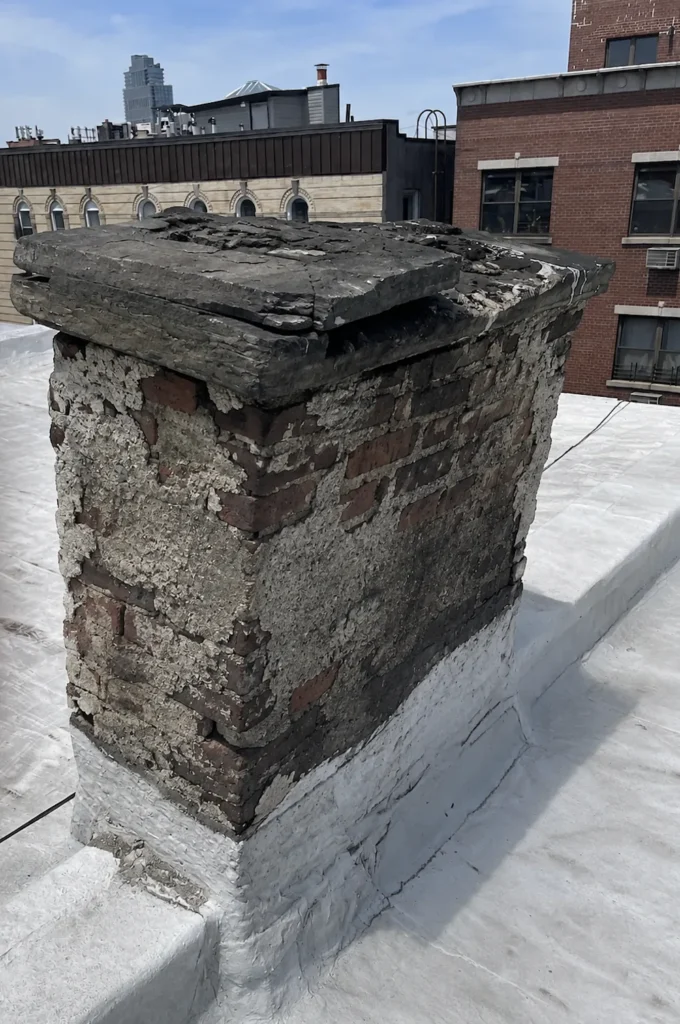
Brick absorbs water. When that water freezes, it expands and pops the face off the brick, a process called spalling. Once the hard face is gone, the brick absorbs even more.
Signs: flaking brick faces on the roof, brick dust around the base of the chimney, white salt deposits (efflorescence) on interior or exterior walls.
The fix: replace damaged bricks, then apply a breathable, vapor-permeable masonry water repellent. Chimney waterproofing has to let moisture escape; paint or ordinary sealers trap it and make spalling worse.
5. Deteriorated Mortar Joints
Mortar wears out faster than brick. Open joints let water straight into the chimney structure. NYC’s older brownstones and row houses often have original lime mortar that has not been repointed in decades.
Signs: sandy or recessed joints, gaps you can see light through, loose bricks.
The fix: repointing. Old mortar is ground out to a consistent depth and replaced with new mortar matched to the brick. On historic masonry, a softer mortar is used so the brick is not damaged. When the damage is too far gone, the top of the stack is rebuilt, as in this chimney stack rebuild.
6. Condensation Inside the Flue
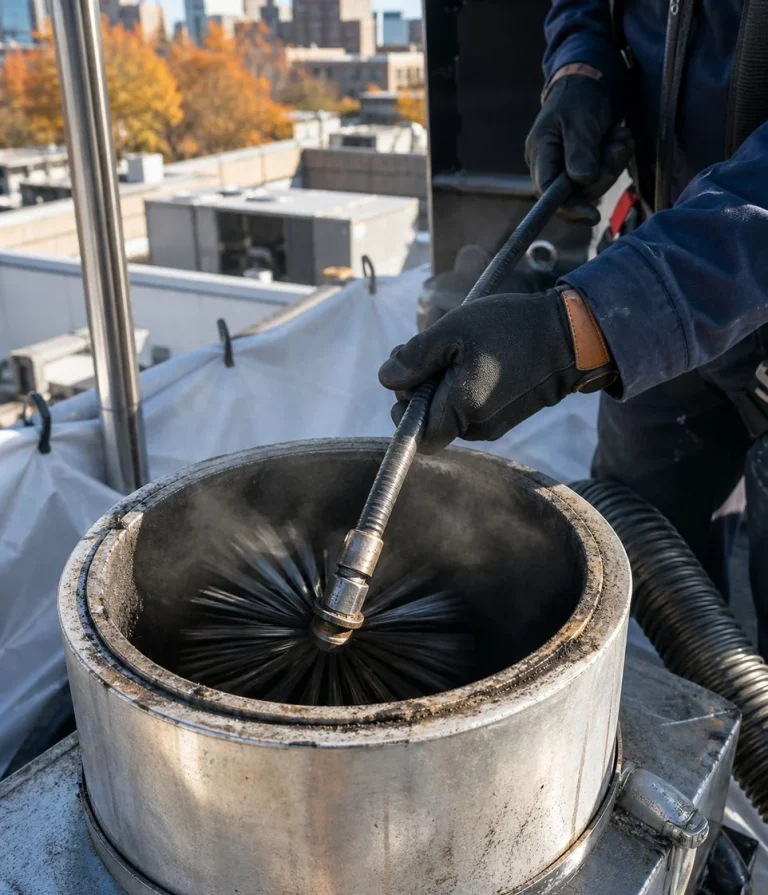
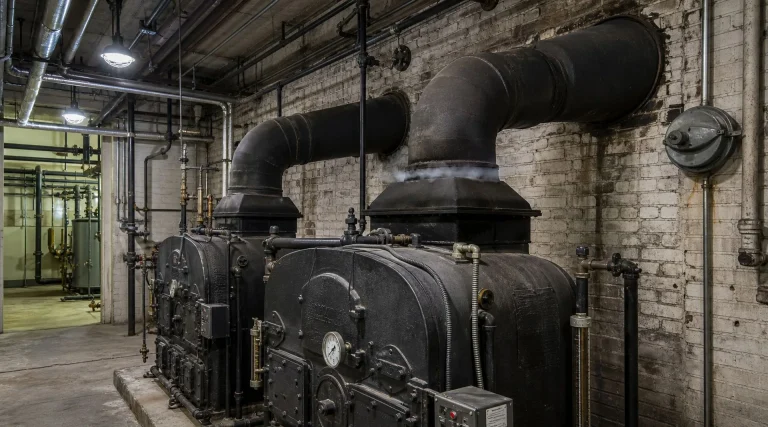
Not every “leak” is rain. When a gas furnace, boiler or water heater vents into an oversized, unlined or poorly insulated masonry flue, the exhaust cools and condenses. The water runs down the flue and stains walls, often in the basement or near the appliance.
Signs: stains that appear in cold, dry weather, white or brown streaks on the chimney breast, water at the base of the flue or cleanout.
The fix: a stainless steel liner sized to the appliance. Our guide Do I Need a Chimney Liner? explains when relining is the answer.
How We Find the Real Source
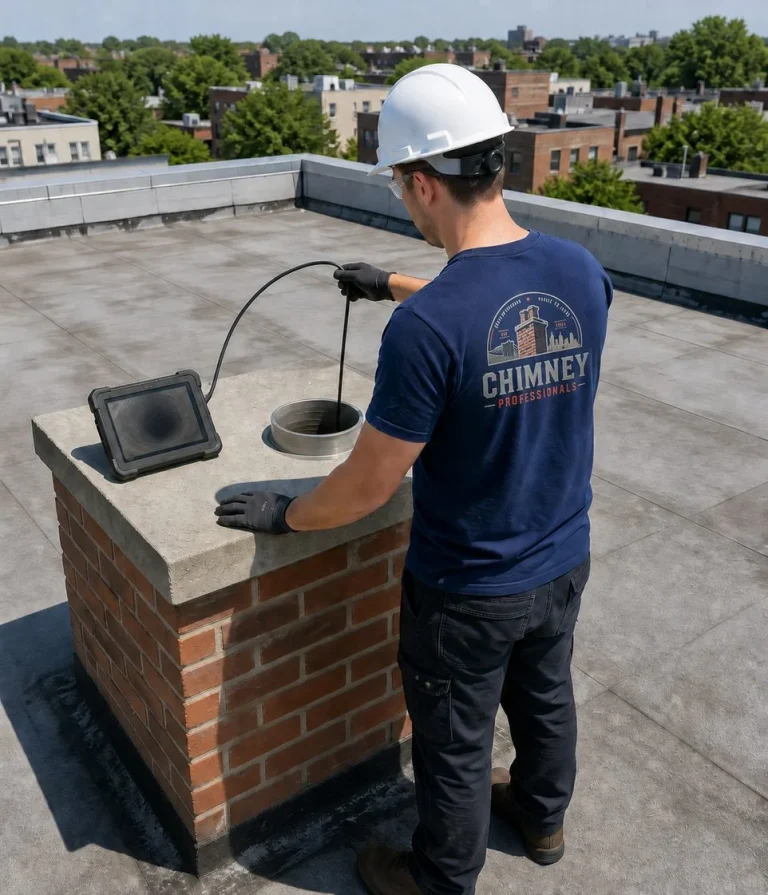
Sealing the wrong spot is the most common reason a chimney leak comes back. During a free estimate we inspect the chimney inside and out: the roof line, crown, cap, masonry and flue, often with a camera. When the source is not obvious, a water test on specific parts of the chimney isolates it. Then we explain what we found and give a written price before any work starts.
Why Not to Wait
Water in a chimney rarely stays small. It rots roof sheathing and framing, stains ceilings, rusts dampers and fireboxes, and in winter every freeze-thaw cycle widens the cracks. Fixing flashing or a crown in the fall usually costs far less than rebuilding the top of a chimney in the spring.
Frequently Asked Questions
Why does my chimney leak only in heavy rain?
Wind-driven rain usually points to flashing or porous brick. Leaks in any rain point more often to a missing cap or a cracked crown.
Can I fix a chimney leak with roofing tar or caulk?
It may slow the leak briefly, but tar and caulk dry out and crack, and they often trap water behind them. A lasting repair replaces or rebuilds the failed component.
Does homeowners insurance cover chimney leaks?
Coverage depends on your policy and on whether the damage is sudden or from long-term wear. Photos and a written description of the cause help with any claim.
How much does chimney leak repair cost?
It depends on the source (flashing, crown, cap, masonry or liner), the chimney height and roof access, and how far the water damage has spread. You get a clear written price after a free estimate.
See a stain after the last storm? Request a free estimate for chimney repair in NYC and Long Island. We find the source before we fix it.