Short answer: creosote is the flammable residue that smoke leaves on the inside of a chimney. It builds up in three stages: dry, flaky soot (stage 1) that a routine sweep removes; crunchy, tar-like flakes (stage 2) that need more aggressive tools; and hard, shiny glaze (stage 3) that needs a specialized chimney cleaning. The further it goes, the higher the risk of a chimney fire.
October is Fire Prevention Week, and it is also when most New York homes light their first fire of the season. It is the right moment to understand what is actually inside your flue.
What Is Creosote and Where Does It Come From?
When wood burns, not all of it burns completely. The smoke carries unburned particles, tar and water vapor up the chimney. As that smoke cools on the flue walls, it condenses into creosote. Anything that makes smoke cooler or slower makes more creosote:
- Wet or green wood. Moisture cools the fire. In New York City, firewood for existing fireplaces must have a moisture content of 20 percent or less (see NYC fireplace rules).
- Smoldering fires with the damper or glass doors partly closed
- An oversized or unlined flue that lets smoke cool before it reaches the top
- Exterior chimneys on cold walls, common on Long Island homes
- Short, frequent fires that never let the chimney get fully warm
The Three Stages of Creosote
| Stage | What it looks like | How it is removed |
|---|---|---|
| Stage 1 | Dry, dark, powdery soot. Brushes off easily. | Routine chimney sweep with brushes and a vacuum |
| Stage 2 | Crunchy, flaky black deposits, sometimes like puffed cereal. Sticks to the flue. | Stiffer brushes and rotary tools, sometimes several passes |
| Stage 3 | Shiny, hard, tar-like glaze. Can drip and harden again. | Deep chimney cleaning with rotary chain tools and creosote-modifying treatments |
Stage 3 is the dangerous one. Glazed creosote is very dense fuel sitting right in the path of the fire, and it is hard to remove. It often builds up in chimneys that have gone several years without service, or where the fireplace has been used heavily with wet wood.
Why Creosote Leads to Chimney Fires
According to the NFPA, failure to clean, mainly creosote in chimneys, is the leading factor contributing to home heating fires. When deposits get hot enough, they ignite. A chimney fire can burn at extreme temperatures, crack clay liners, warp metal and spread to the framing around the chimney.
Many chimney fires are slow and quiet and go unnoticed until an inspection finds the damage. Others are loud: a roaring sound, heavy smoke, a strong hot smell and flames or sparks from the top of the chimney. If that happens, get everyone out and call 911. After any chimney fire, NFPA 211 calls for a Level II inspection before the fireplace is used again.
Signs of Creosote Buildup You Can Check Yourself
- A strong, smoky or asphalt-like smell, especially in humid weather
- Black flakes falling into the firebox
- Fires that are harder to start or keep going
- Smoke coming back into the room
- Dark, tarry streaks around the damper or on the smoke chamber
With the fireplace cold and a flashlight, you can scratch the flue just above the damper with a fireplace poker. If the deposit is about 1/8 inch thick or more, or if it is glossy and hard, it is time for professional service. Do not light another fire until it is cleaned.
Sweep or Chimney Cleaning: Which Do You Need?
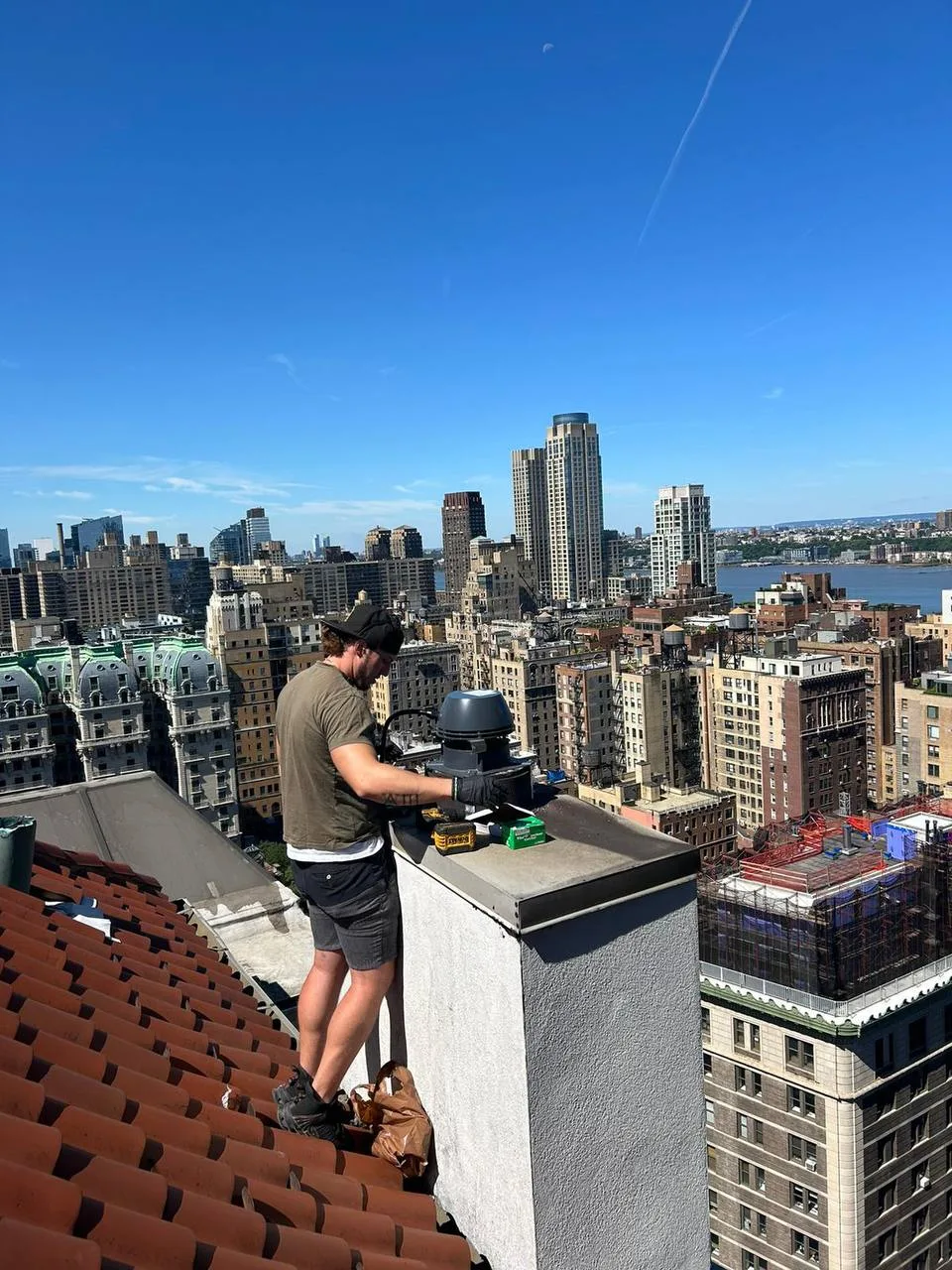
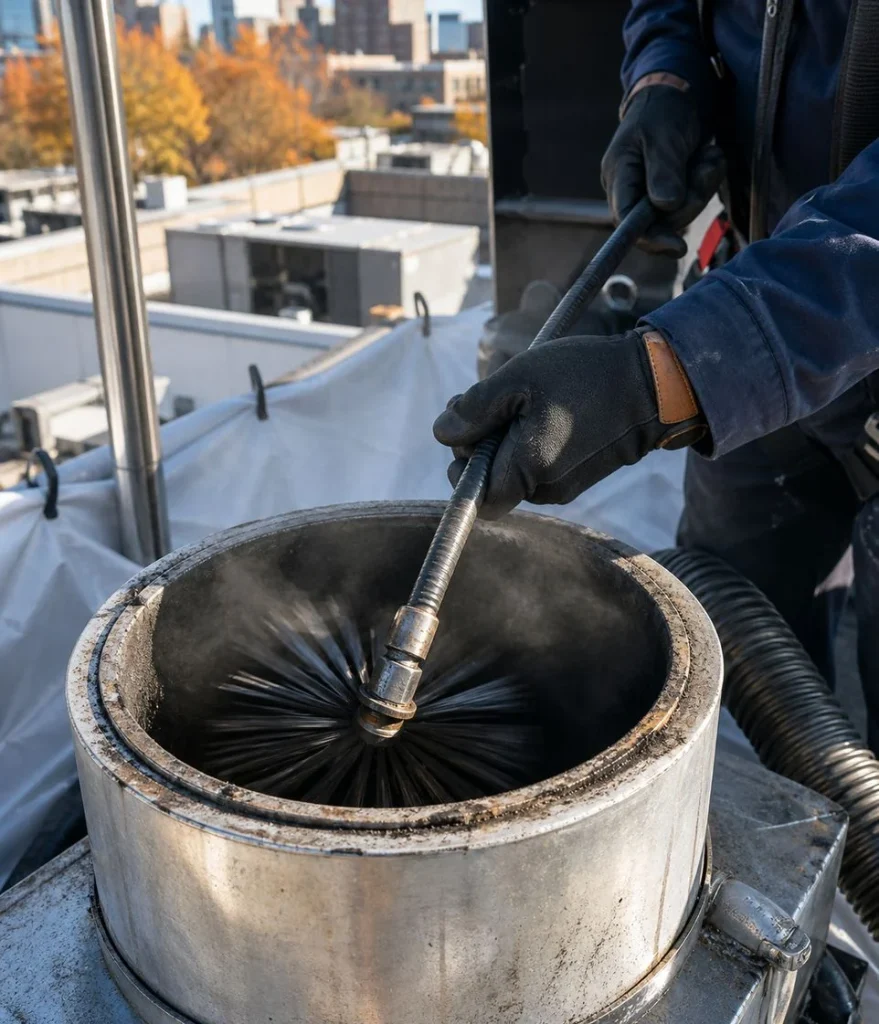
A chimney sweep is routine annual maintenance. It removes stage 1 soot and light stage 2 deposits and is the right service for a fireplace that is swept every year.
A chimney cleaning is the deeper service for heavy stage 2 and all stage 3 creosote, blockages, or a chimney that has not been serviced in years. During every sweep we look at the flue, and if we find buildup that a brush cannot remove, we explain it and quote it before doing any extra work.
How to Keep Creosote Under Control
- Burn only dry, seasoned hardwood, and never trash, cardboard or treated lumber.
- Build hotter, smaller fires rather than long smoldering ones.
- Open the damper fully until the fire is completely out.
- Make sure the chimney has a cap and a correctly sized liner.
- Have the chimney swept and inspected once a year, as NFPA 211 recommends.
Frequently Asked Questions
Can creosote sweeping logs replace a chimney sweep?
No. Treatment logs can help loosen some deposits, but they do not remove creosote or inspect the chimney. A professional sweep is still needed.
How fast does creosote build up?
It depends on how often you burn and what you burn. A fireplace used most weekends with dry wood may be fine with an annual sweep; heavy use or wet wood can create dangerous buildup in a single season.
Do gas fireplaces create creosote?
Not in the same way, but gas flues collect soot, debris and corrosion and still need annual service.
Is glazed creosote dangerous?
Yes. Stage 3 glaze is highly flammable, even in thin layers, and should be removed before the fireplace is used again.
Not sure what is in your flue? Request a free estimate for a chimney sweep anywhere in NYC or Long Island. We check the creosote stage on every visit and tell you exactly what it needs.