Short answer: a commercial chimney inspection is a documented evaluation of a building’s chimneys, boiler stacks, breeching and venting against NFPA 211 and the applicable NYC codes. Most buildings need a Level I inspection every year, a Level II when the building is sold, the fuel or boiler changes, or after a fire or storm, and a Level III only when a hidden hazard is suspected. The deliverable is a written report with photos, video and a clear list of corrective work.
For multifamily buildings, commercial properties, restaurants and industrial sites, the chimney is part of life safety and part of the paper trail. Here is how to decide what your building needs and what to expect from the inspector.
Why Commercial Chimneys Need a Different Kind of Inspection
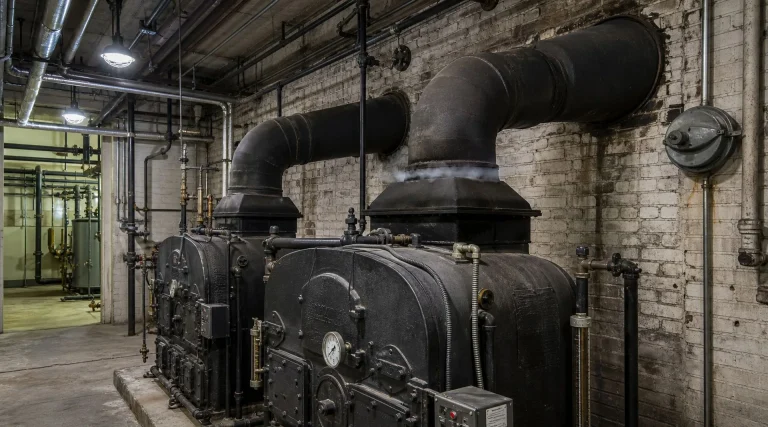
Commercial systems work harder than a living room fireplace. A boiler stack in a 40-unit building runs for most of the day from October to May. Restaurants may vent solid-fuel ovens for 12 hours a day. Industrial equipment can produce high temperatures and corrosive exhaust. At the same time, the consequences of failure are bigger: a blocked flue can shut down heat for an entire building or put carbon monoxide into occupied floors.
That is why commercial chimney inspection is a compliance and risk function, not a routine check. The report often ends up in front of insurers, buyers and lenders.
The Three Inspection Levels, Explained for Buildings
NFPA 211, the national standard for chimneys, fireplaces, vents and solid fuel-burning appliances, defines three levels of inspection.
| Level | When a building needs it | What it adds |
|---|---|---|
| Level I | Every year for a system in stable service | Readily accessible chimney, breeching and connections; flue free of obstructions and deposits |
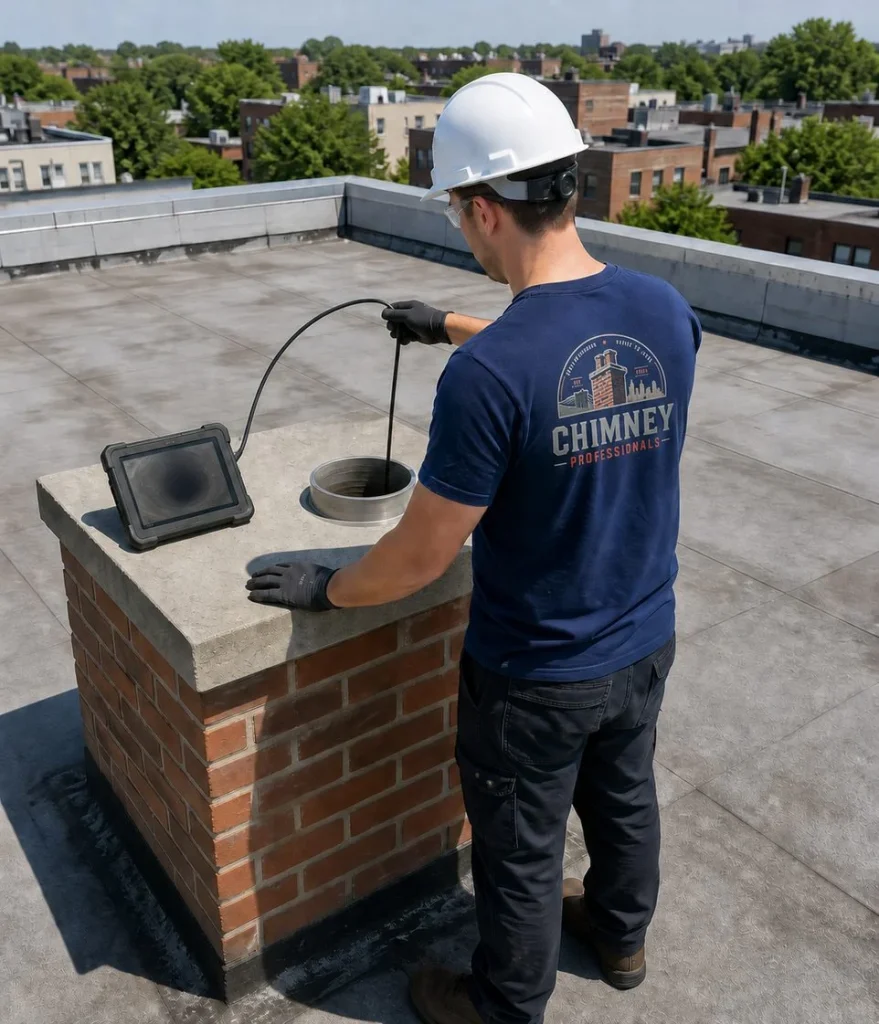
| Level II | Sale or transfer, fuel or appliance change, relining, after a chimney fire, storm or settlement | Accessible attics, crawl spaces and roof areas plus a video scan of the full flue |
| Level III | A serious hidden hazard is suspected | Access to concealed areas, which can mean removing parts of the structure |
Level I: annual inspection for systems in stable service
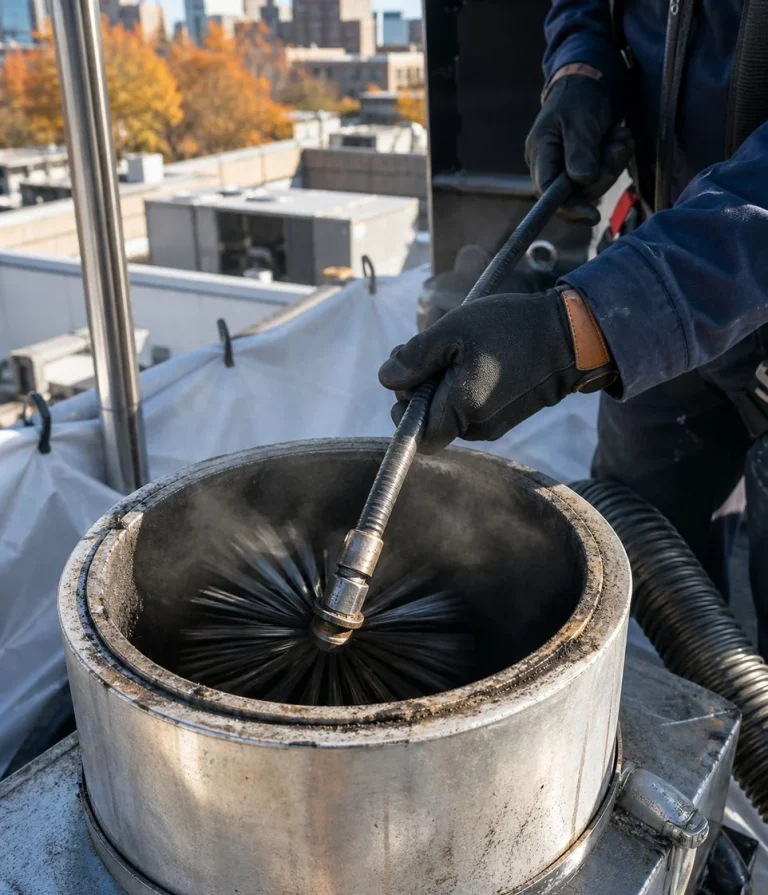
For chimneys with no changes to the appliance, fuel or structure. It is the baseline property managers keep on file every year, and it pairs well with a commercial chimney sweep and cleaning.
Level II: sale, system change or after an event
Fuel conversions tied to the city’s No. 4 heating oil ban fall into this category. See our Level II inspection for details.
Level III: investigating a suspected hidden hazard
Used when a Level I or II inspection points to a serious problem that cannot be evaluated without accessing concealed areas. It is targeted, not routine.
When Your Building Should Schedule an Inspection
- Before heat season. NYC heat season runs October 1 to May 31. Late summer or early fall is ideal.
- Before a fuel conversion or boiler replacement, so the new venting is designed around real conditions.
- During due diligence for a purchase or refinance.
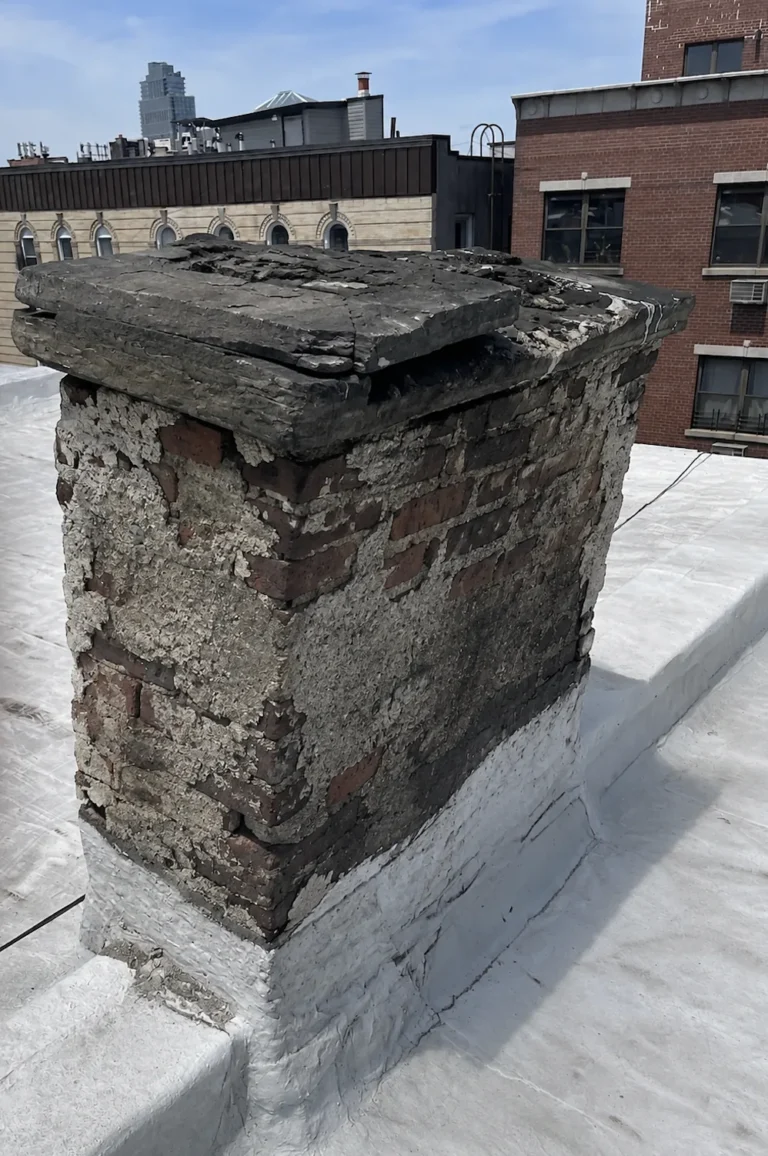
- After a chimney fire, lightning strike, storm or nearby construction that could have damaged the stack.
- When the insurer asks for documentation at renewal.
- After a violation related to venting, to scope and document the correction.
- When symptoms show up: exhaust odors, boiler lockouts, water stains near the stack. Our list of 5 boiler chimney warning signs covers them.
What a Good Commercial Inspection Report Includes
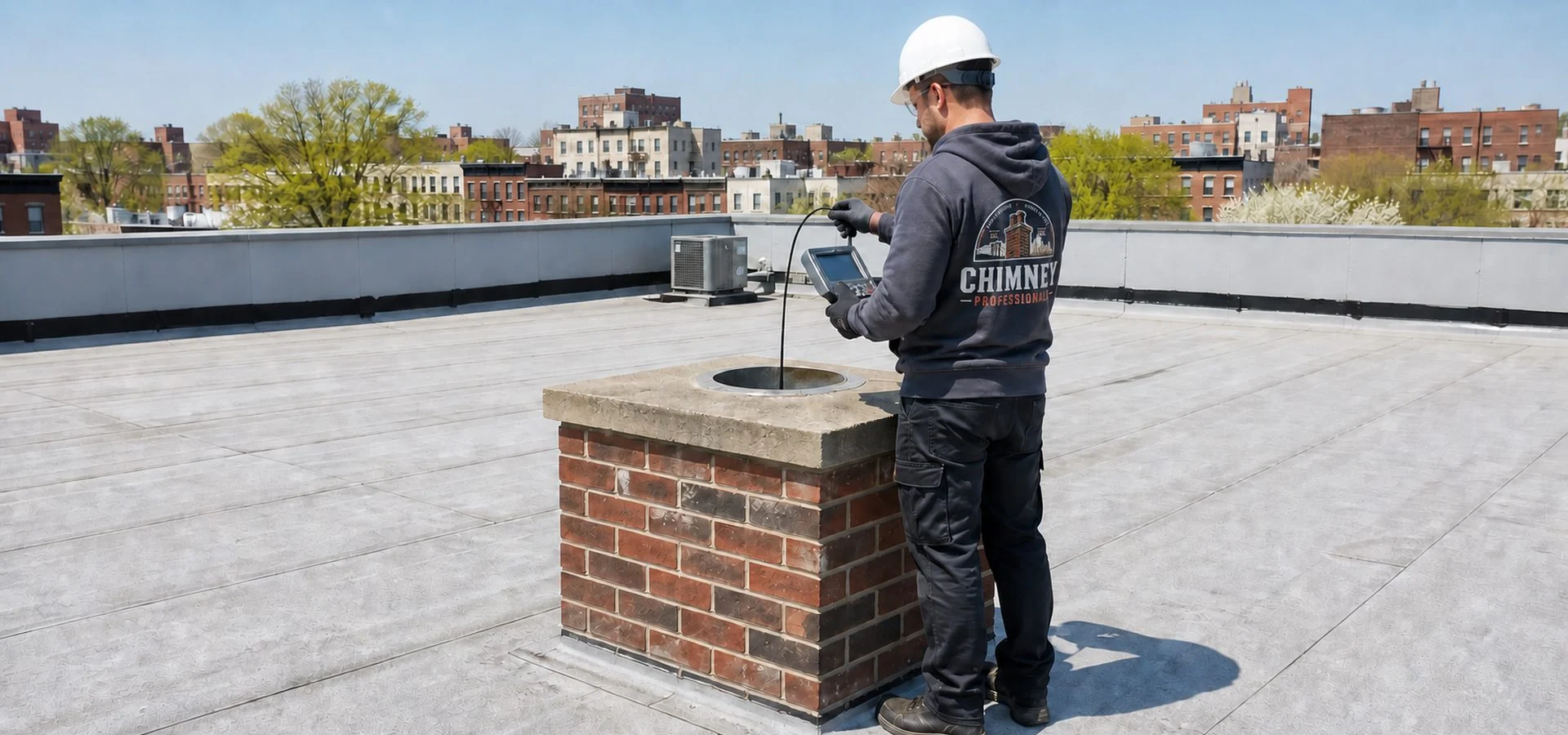
The report is the product you are paying for. Before you hire anyone, ask for a sample. It should contain:
- Scope: every chimney, flue, breeching run and appliance connection included, by location.
- Inspection level performed and why.
- Condition ratings for masonry, crown, cap, flashing, liner, breeching, supports and cleanouts.
- Photo and video evidence, including camera footage of the flue interior.
- Draft and pressure test results under operating conditions.
- A plain statement of code-deficient components, separated from maintenance recommendations.
- Prioritized corrective actions, marked urgent, near-term or budget.
- Inspector name and date.
How to Prepare for the Inspection
- Arrange access to the boiler room, roof and any bulkheads, and let the super know the schedule.
- Collect past reports, boiler specs and any open violations.
- Plan for scaffold or lift access if stacks are tall or over a sidewalk.
- Tell tenants if roof or boiler room access will cause noise or brief interruptions.
- For a portfolio, ask for consolidated reporting across buildings.
Inspection and Repair From One Team
Many inspection firms find the problem and then send you looking for a contractor. Our commercial chimney inspection team documents the condition and, if corrective work is needed, prepares a written proposal. Because we manufacture UL Listed stainless steel liners, flue pipe, caps and chase covers in house, the same team that documented the fault can close it out through commercial chimney repair.
Frequently Asked Questions
How often does a commercial chimney need to be inspected?
At least once a year under NFPA 211, and additionally after any change to fuel or equipment, a sale, or an event that could damage the system.
Is a chimney inspection the same as the DOB boiler inspection?
No. The annual boiler inspection focuses on the boiler itself. A chimney inspection covers the stack, liner and breeching that vent the boiler. Many buildings schedule both before heat season.
Can you inspect while the building is occupied?
Yes. We stage the work to minimize disruption and arrange safe access to tall and exterior stacks.
Do you inspect industrial chimneys?
Yes. We inspect industrial and institutional chimneys and boiler stacks, including high-load heating plants and gas conversion venting.
Need documentation before heat season? Request a free estimate for a commercial chimney inspection in NYC or Long Island.