Short answer: yes, almost every chimney that vents a fireplace, stove, furnace, boiler or water heater needs a sound, correctly sized liner. You likely need a new liner or relining if the existing one is cracked, crumbling or missing, if you replaced your heating appliance or changed fuel, or if you notice smoke, odors or poor draft. A camera inspection confirms it.
The liner is the part of the chimney you never see, which is exactly why it is so often neglected. In New York City, where many homes date from the early 1900s, a large share of chimneys still rely on original clay tiles or have no liner at all. Here is how to tell whether yours is doing its job.
What a Chimney Liner Does
A chimney liner is the inner channel that carries smoke and combustion gases from the appliance to the outside. It does three jobs:
- Protects the house from heat. Without a sound liner, heat can pass through the masonry to wood framing nearby.
- Protects the masonry from acids. Combustion gases contain water vapor and acids that eat brick and mortar from the inside.
- Sizes the flue to the appliance. A liner of the right diameter keeps gases moving fast enough to draft properly and limits condensation and creosote.
NFPA 211, the national standard for chimneys, and the building codes that adopt it require chimneys to be lined.
Signs Your Chimney Liner Is Failing
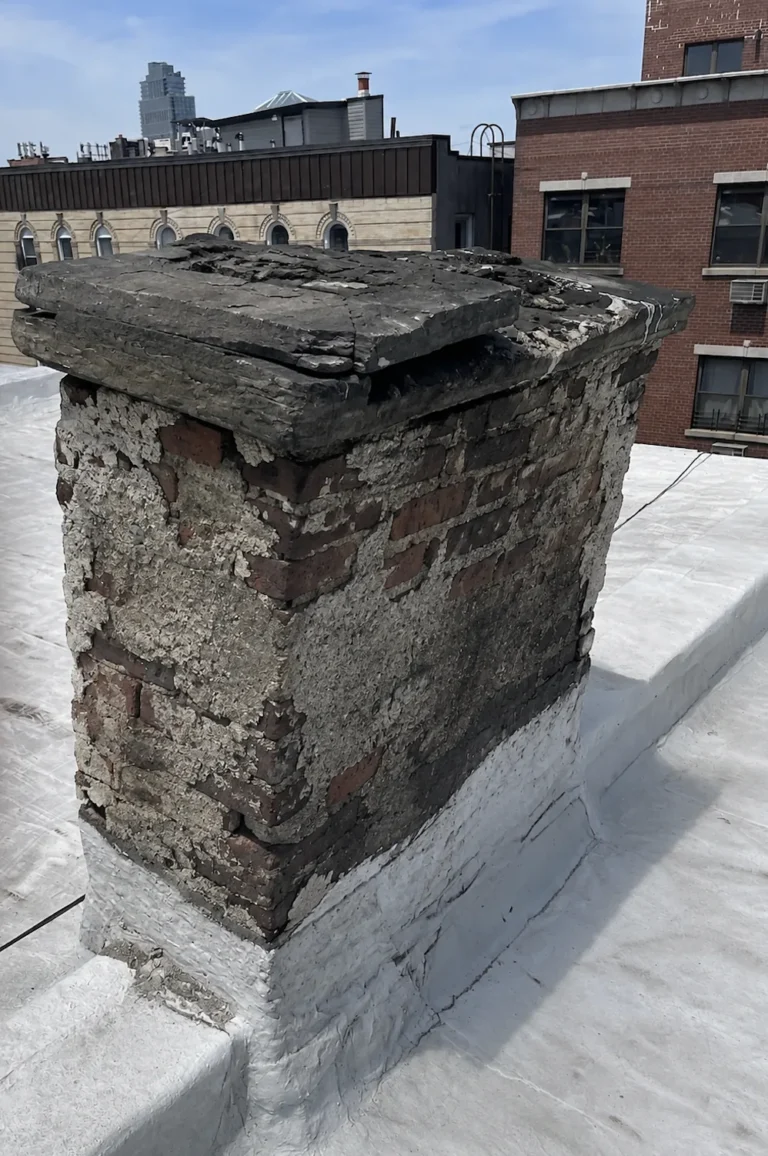
- Pieces of clay tile or flaky debris falling into the firebox or the cleanout
- Smoke or odors coming into the room, or into a neighboring room on another floor
- A weak draft or a fireplace that is hard to start
- Water stains or a musty smell near the chimney
- Rust at the bottom of a metal liner or around the appliance connector
- A furnace or boiler that locks out on venting faults
- A chimney fire in the past, even a small one
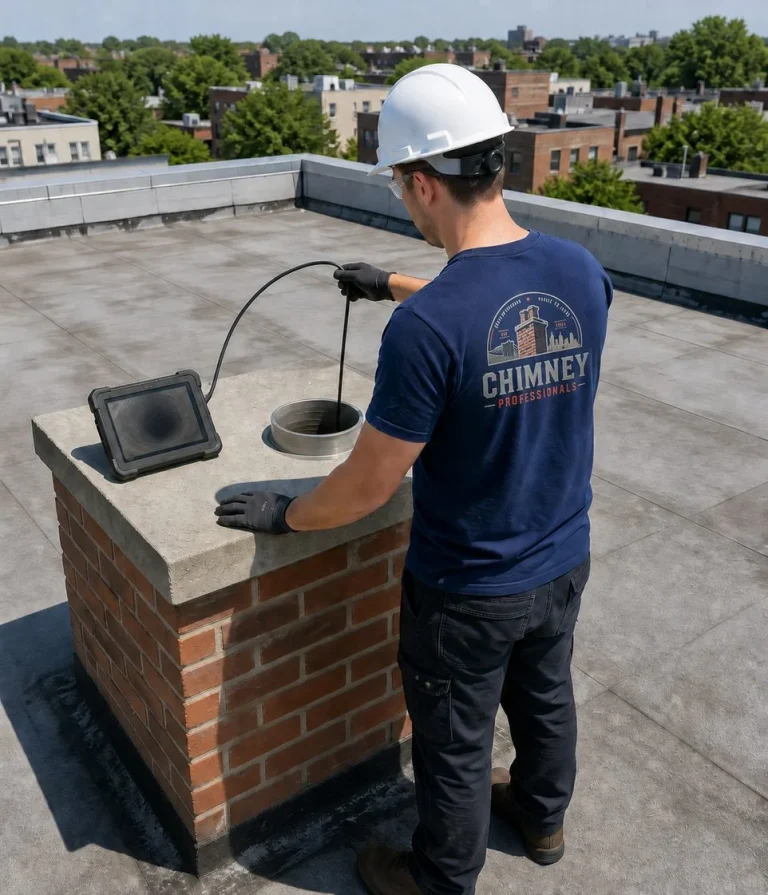
Some problems give no sign at all. Cracks in clay tiles are often invisible from the fireplace, which is why a camera scan (part of a Level II inspection) is the only reliable way to see the full length of the flue.
When You Need a New Liner Even If Nothing Looks Wrong
You replaced your boiler, furnace or water heater. New high-efficiency appliances produce cooler exhaust. In an old, oversized masonry flue that cooler gas condenses, and the moisture and acids destroy clay liners and mortar quickly. The new appliance usually needs a liner sized to its exhaust.
You switched from oil to gas, or the other way around. Each fuel has different venting requirements. In NYC, buildings leaving No. 4 oil before the 2027 deadline face exactly this question; see our guide to the No. 4 heating oil ban.
You are adding a wood stove or insert. Inserts need a stainless steel liner connected directly to the unit.
The furnace moved and the water heater was left behind. An “orphaned” water heater alone in a large flue often drafts poorly and can spill carbon monoxide.
Types of Chimney Liners
Clay tile liners
The traditional liner in masonry chimneys. Clay is durable when intact, but it cracks from thermal shock, settling and chimney fires, and replacing broken tiles inside a finished chimney is difficult. That is why a failed clay liner is usually relined rather than repaired.
Stainless steel liners
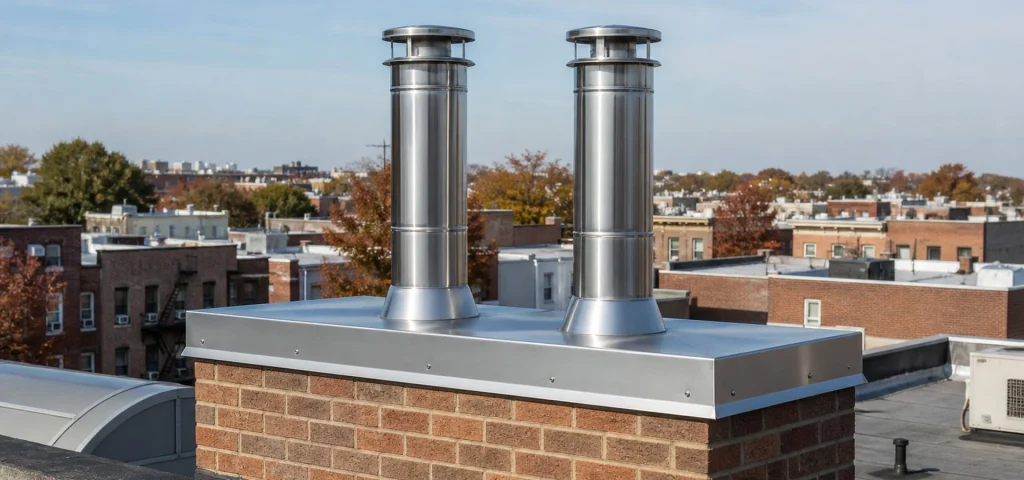
The most common choice for relining. A rigid or flexible stainless steel liner is run down the existing flue and connected to the appliance, with insulation added where clearances or performance require it. Stainless steel handles wood, gas and oil when the correct alloy is used, and it can be sized precisely to the appliance.
Cast-in-place liners
A cement-like mixture is poured around a form inside the flue, creating a smooth, insulated new liner. It is used mainly to restore old masonry chimneys with irregular or damaged flues.
How Long Does a Stainless Steel Chimney Liner Last?
A good stainless steel liner, installed and sized correctly and serviced once a year, can last for decades. What shortens its life is the wrong alloy for the fuel, a liner that is oversized for the appliance, water entering from a missing cap, and skipped maintenance. The stainless steel liners we install are UL Listed components we manufacture in house, sized to your flue rather than cut from stock.
What Chimney Relining Involves
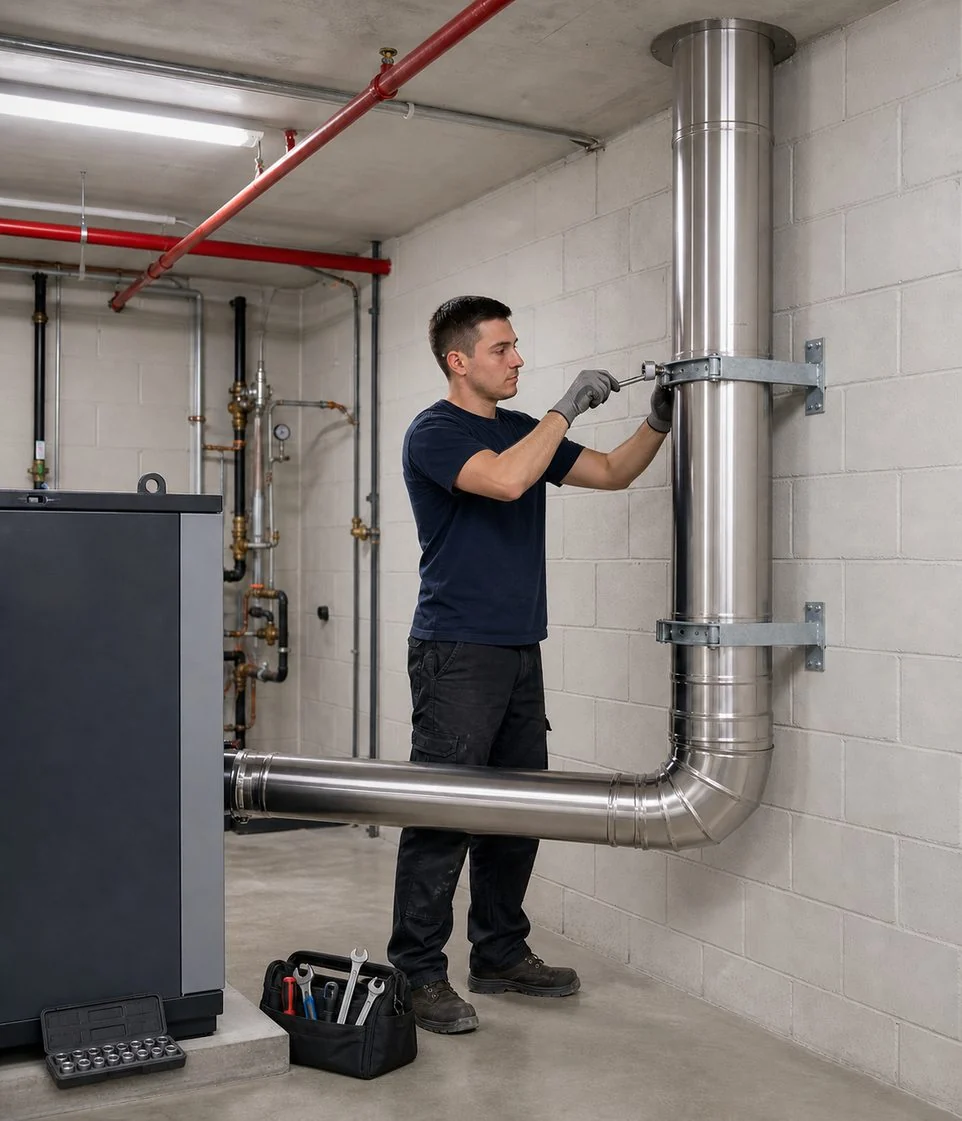
- Inspection and measurement. We scan the flue, measure the run and check the appliance specifications.
- Sizing. The liner diameter is matched to the appliance, not to the old flue.
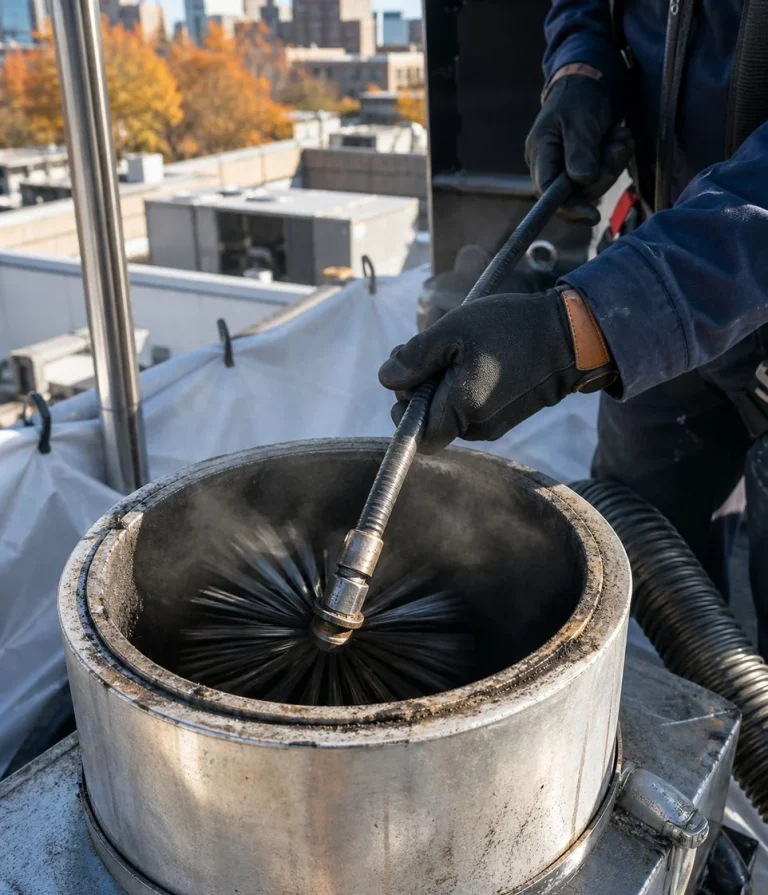
- Preparation. Loose tile, debris and obstructions are removed so the new liner runs straight.
- Installation. The liner is lowered from the roof, connected to the appliance or fireplace, and sealed at the top with a top plate and cap.
- Testing. Draft is tested, and you receive written documentation of the work.
Most residential relining jobs are completed in a single visit. See a real example in our stainless steel liner installation project.
Frequently Asked Questions
Is a chimney liner required by code?
Yes. Model codes and NFPA 211 require chimneys serving fireplaces and fuel-burning appliances to be lined with an approved liner.
Can a cracked clay liner be repaired?
Minor defects can sometimes be resurfaced, but a cracked clay liner is usually relined with stainless steel or a cast-in-place system because broken tiles are hard to reach.
How much does a chimney liner cost?
It depends on the chimney height and liner length, the appliance and fuel, whether insulation is needed, the condition of the existing flue and roof access. We give a written price after a free estimate.
Do gas furnaces need a chimney liner?
Yes. Gas exhaust is full of water vapor, and without a correctly sized liner it condenses and damages the chimney.
Not sure about your liner? Request a free estimate for chimney liner installation and relining in NYC and Long Island.